About
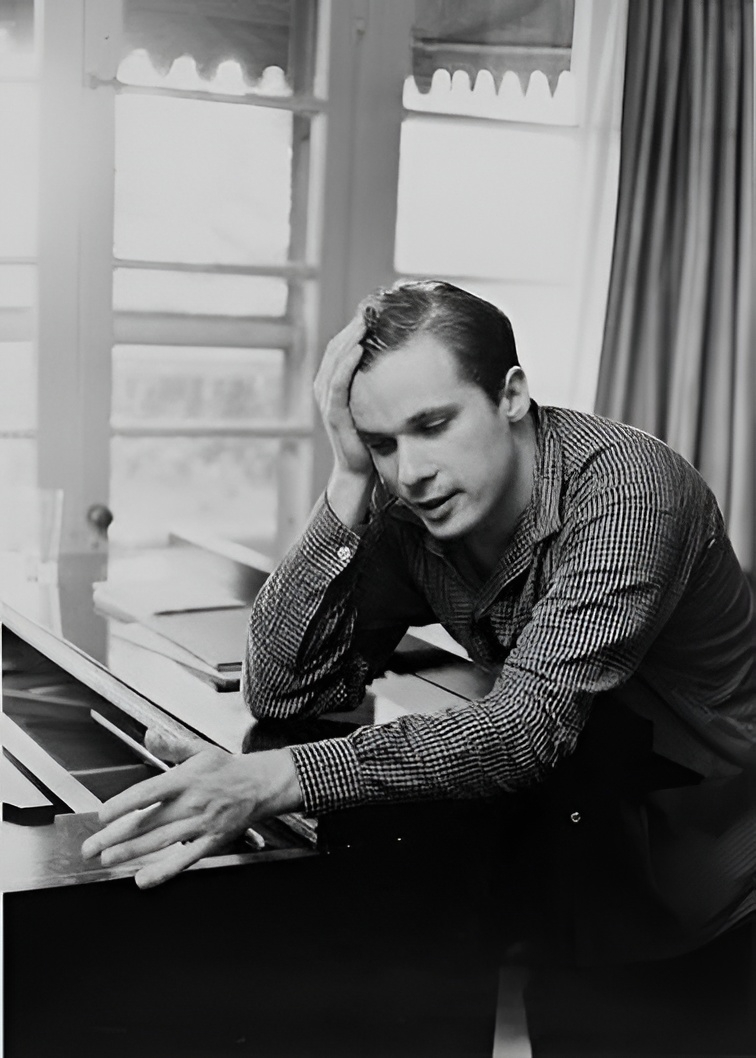
Glenn Gould was a Canadian pianist widely regarded as one of the most significant and idiosyncratic classical musicians of the 20th century, renowned above all for his radical reinterpretation of Johann Sebastian Bach’s keyboard works.
Born in Toronto on September 25, 1932, Gould showed prodigious musical talent from early childhood. He began piano lessons with his mother and later studied at the Royal Conservatory of Music in Toronto under Alberto Guerrero, giving his first public performances while still a teenager. By his early twenties, he had already developed the unmistakable traits that would define his career: an unconventional low-slung seated posture at a specially built chair, audible humming while he played, and an intensely analytical, almost architectural approach to phrasing and counterpoint.
Gould’s international breakthrough came with his 1955 recording of Bach’s Goldberg Variations for Columbia Records. The interpretation was crisp, fast, rhythmically incisive, and utterly unlike the more Romantic performance traditions of the time, and it became a sensation that remains one of the best selling classical piano recordings in history. It established Gould as a fresh and controversial voice, equally capable of dazzling technical brilliance and startling interpretive choices.
His recorded repertoire extended well beyond Bach to include Beethoven, Brahms, Schoenberg, and other twentieth century composers, though he was notably dismissive of much of the standard Romantic repertoire, including significant portions of Chopin and Liszt. He was also an accomplished writer and broadcaster, producing innovative radio documentaries, most famously The Idea of North, that experimented with overlapping voices in a technique he called « contrapuntal radio. »
Gould returned to the Goldberg Variations in 1981, recording a second, markedly different interpretation that was slower and more introspective, often seen as a kind of artistic summation. He died in Toronto on October 4, 1982, just days after suffering a stroke, at the age of 50.
Gould’s legacy endures through his recordings, his writings, and his singular philosophy of music making, which continues to influence pianists and provoke debate about the nature of interpretation, authenticity, and performance itself.
Your content goes here. Edit or remove this text inline or in the module Content settings. You can also style every aspect of this content in the module Design settings and even apply custom CSS to this text in the module Advanced settings.